

Today, May 1, the Skirball Cultural Center officially opens its career-spanning Jack Kirby exhibition, Heroes and Humanity (on view through March 1, 2026). Last night, the Skirball launched Heroes and Humanity (and its other brand-new exhibition, Away in the Catskills) with a reception and preview for members and supporters. This preview was well attended to the point of congestion: the museum’s courtyard was thronged, and jostling crowds packed the galleries. My wife and my daughter and I were there. So were a great many colleagues, friends, and acquaintances, some I hadn’t seen since the CSUN Kirby show almost ten years ago. In fact, the crowd was a Who’s Who of Kirby collectors and historians. Members of the Kirby family were there too (I spoke briefly to Kirby’s granddaughter Jillian, as well as, to my surprise, Joe Simon’s grandson Jesse). At the night’s end, the Skirball’s staff could hardly get the Kirby crowd out of the museum; as we drove away, the front steps were still teeming with people.
To call the reception a success would be an understatement.
Navigating Heroes and Humanity took me the better part of two hours. This is partly because I kept running into friends, former students, former lenders, and others to whom I desperately wanted to talk (readers of this blog will likely know of Jack Kirby Collector publisher-editor John Morrow and Kirby Museum stalwarts Rand Hoppe, Tom Kraft, and Mike Cecchini — that’s just the iceberg’s tip). Plus there was, again, the crowd, eager, voluble, and large. But beyond that, there was so much to look at and take in. Honestly, I couldn’t get close to every bit of exhibitry, every wall, installation, case, or monitor, and I didn’t try. I knew I’d be coming back (I will be going back) repeatedly. At times, I’d look closely at a work or a wall and rhapsodize about it to anyone who would hear (pretend docent syndrome). At other times, I’d just skirt around. I took no photos for my first hour in the gallery, but waited for the crowd to thin slightly before I rewound, restarted, and snapped some pix. I need to get better shots.
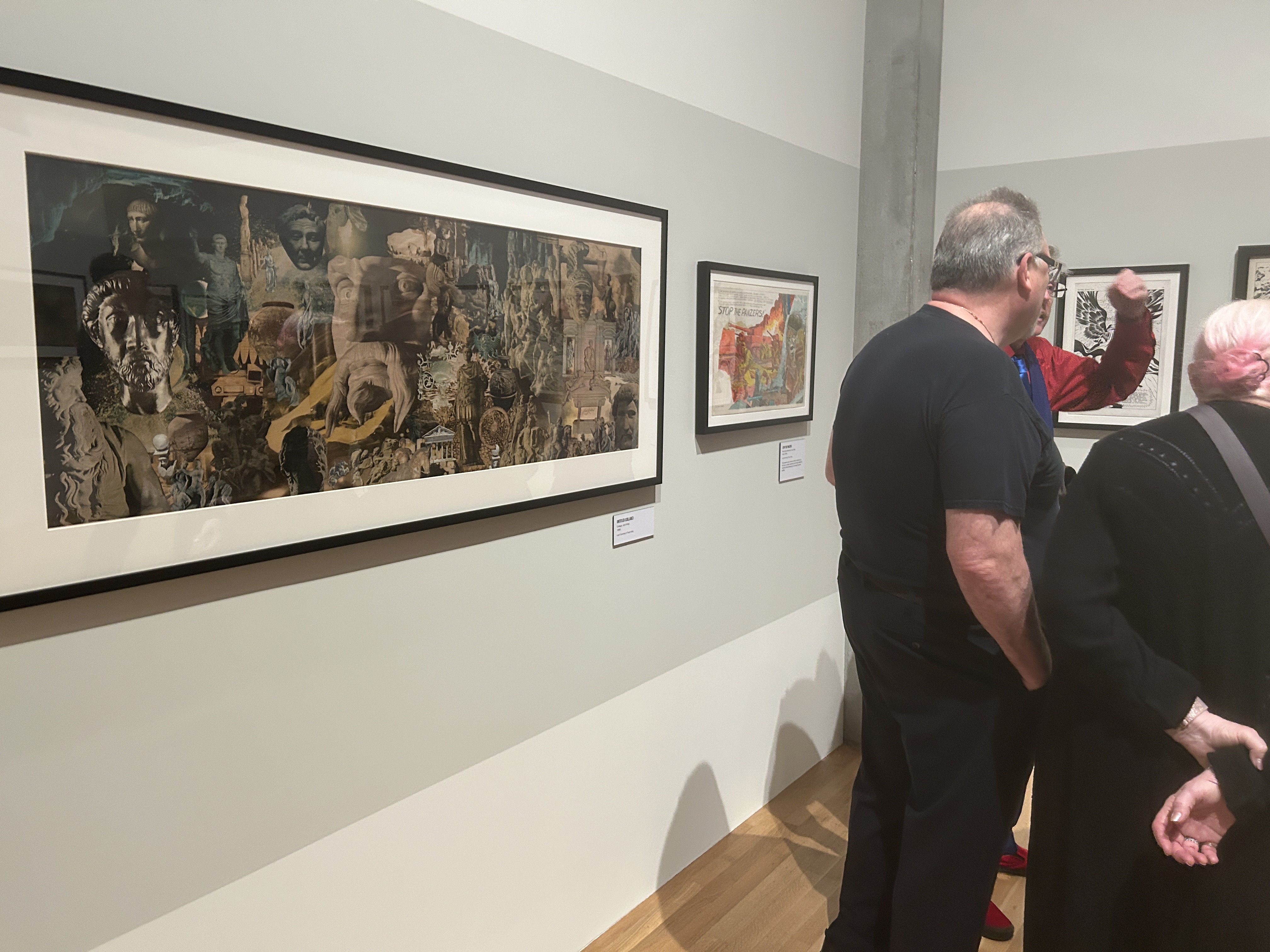
My photos (most taken just before closing time) underplay the size of the crowd:
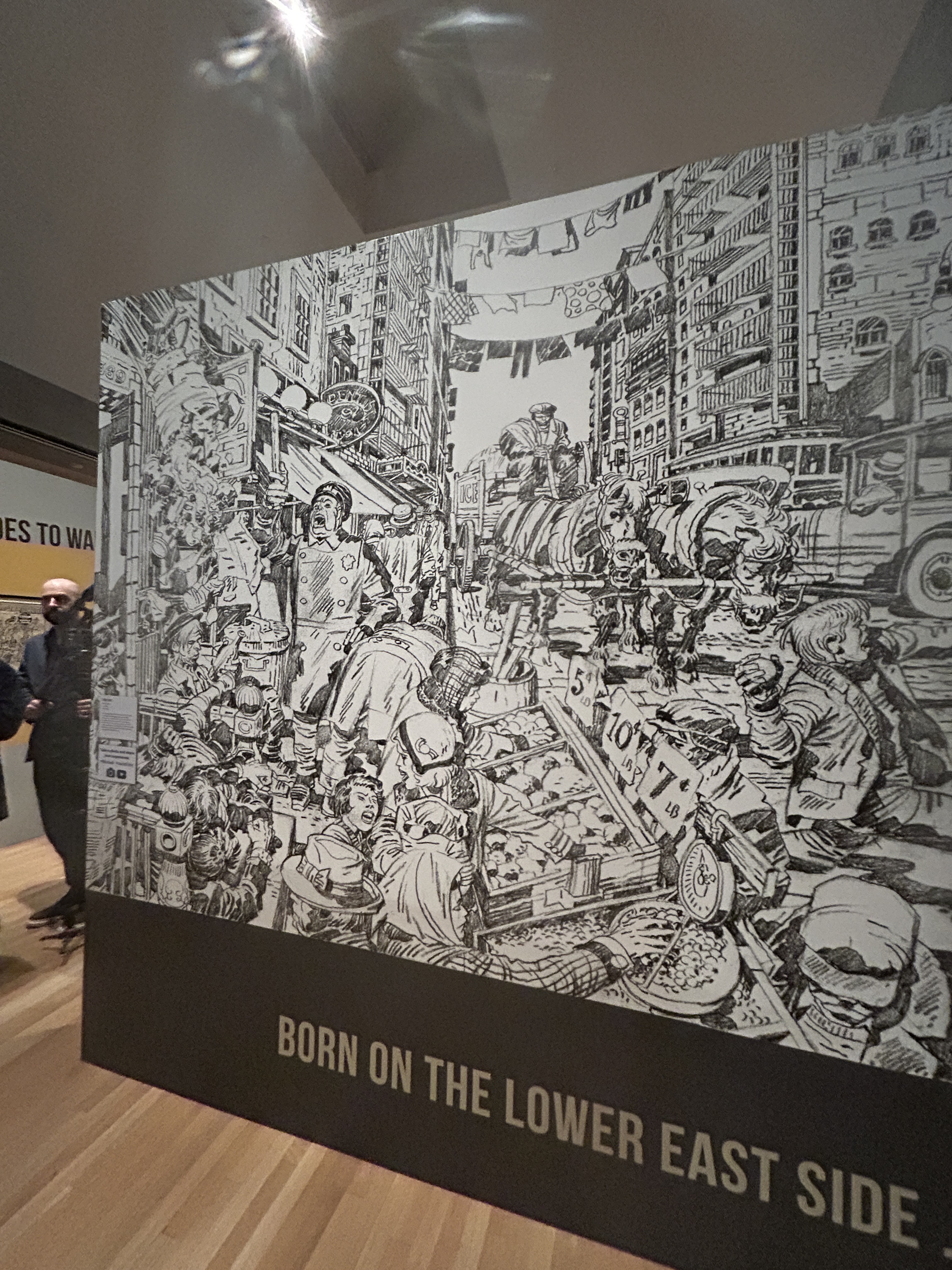
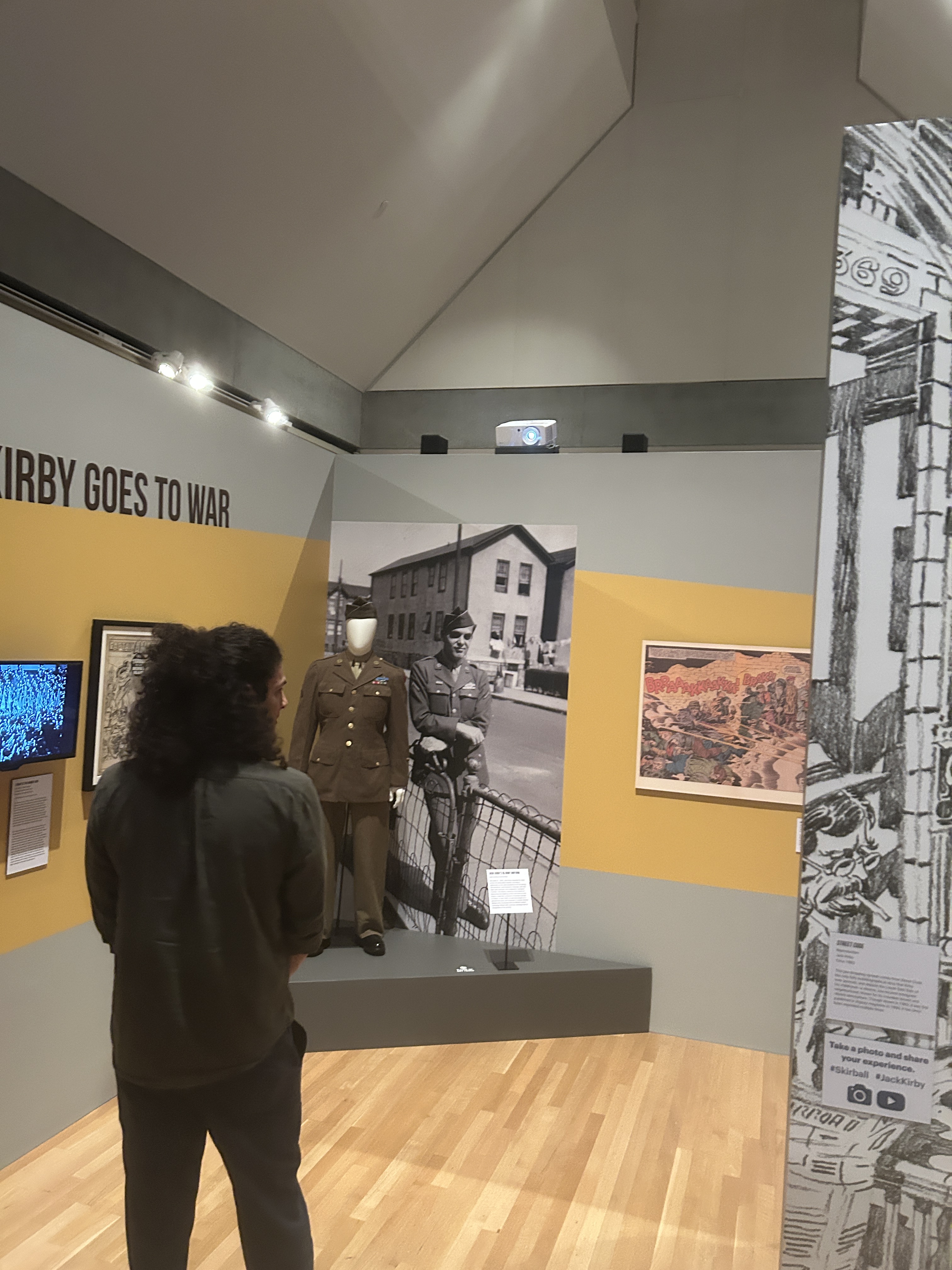
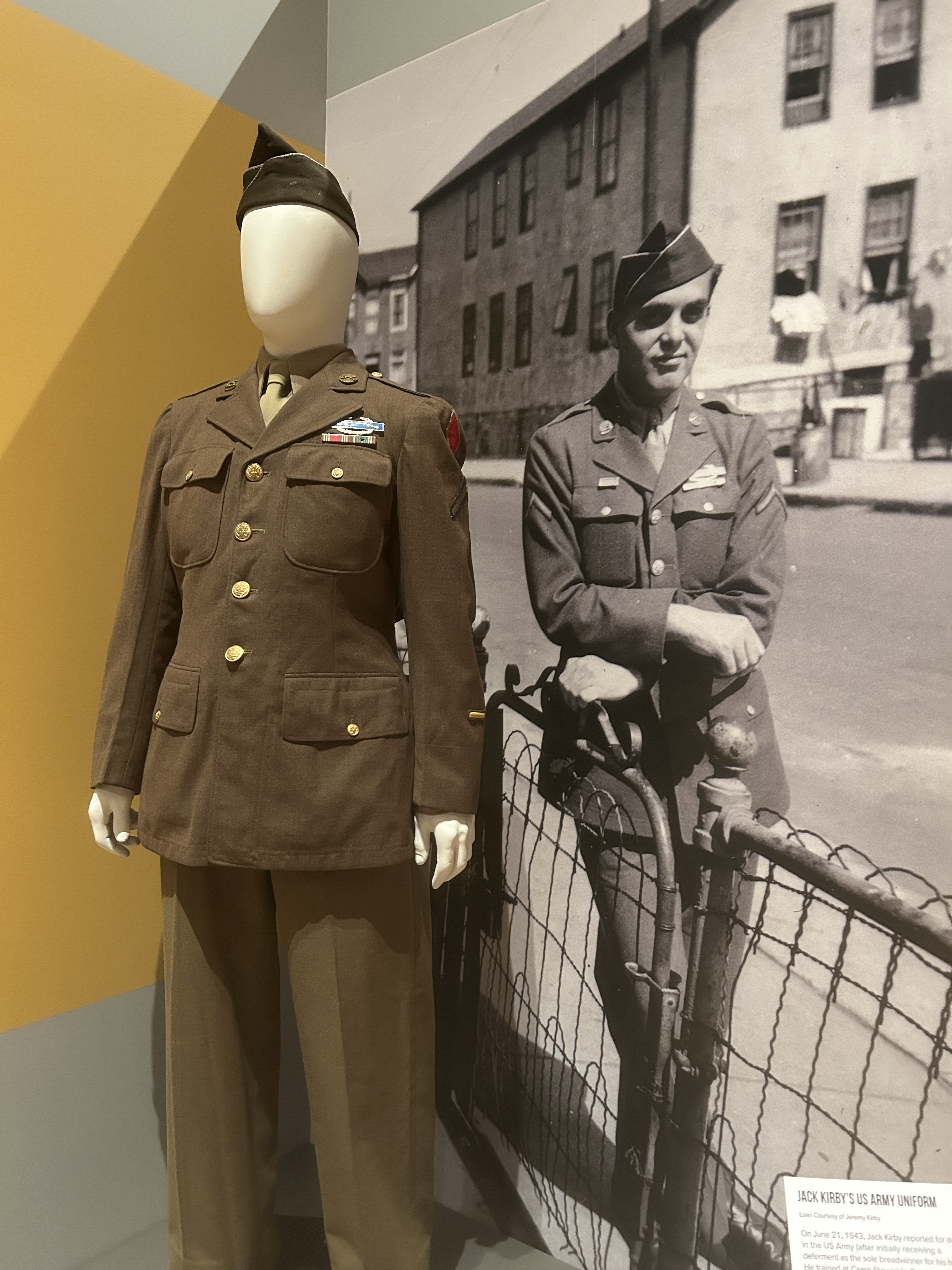
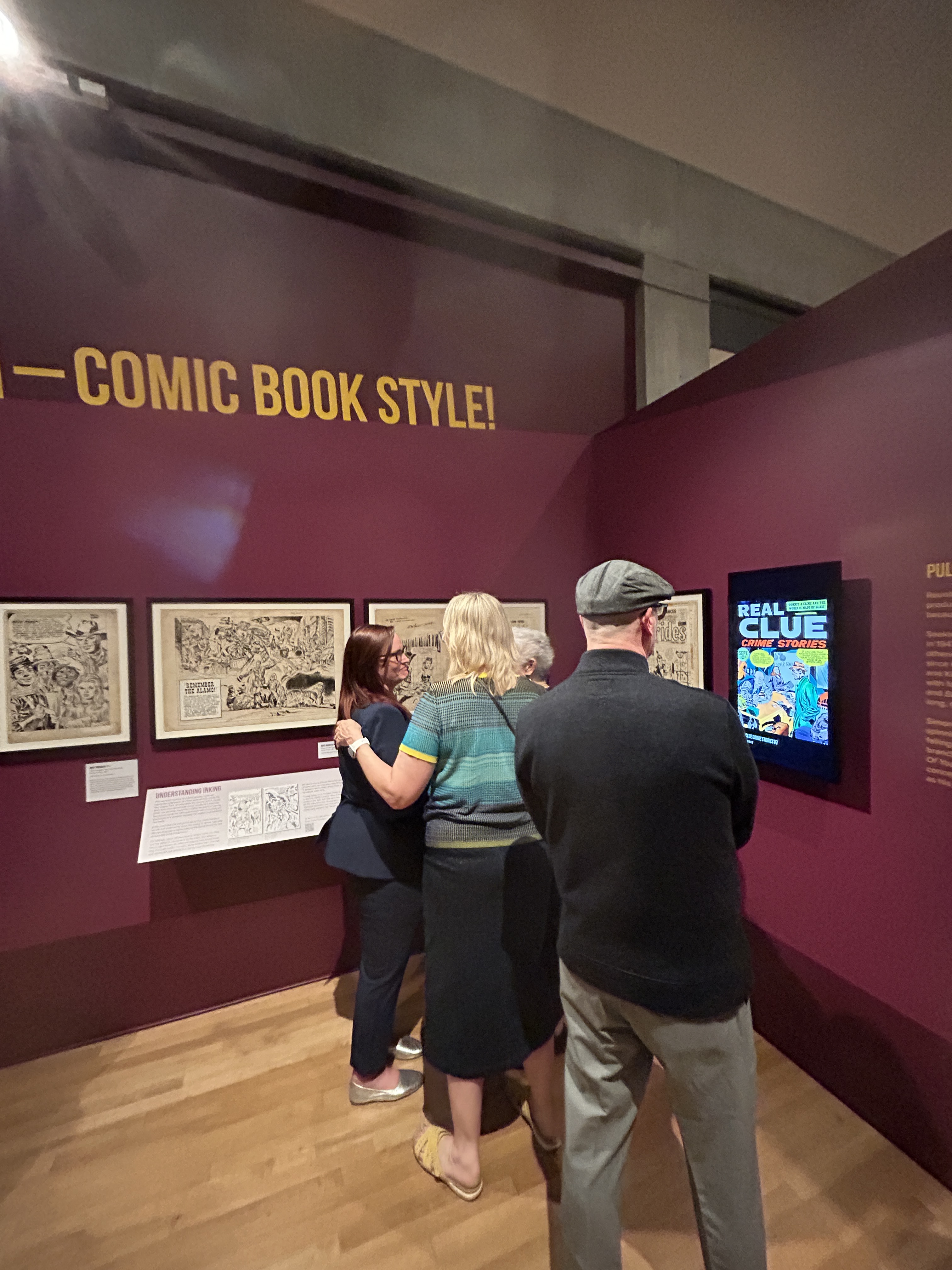
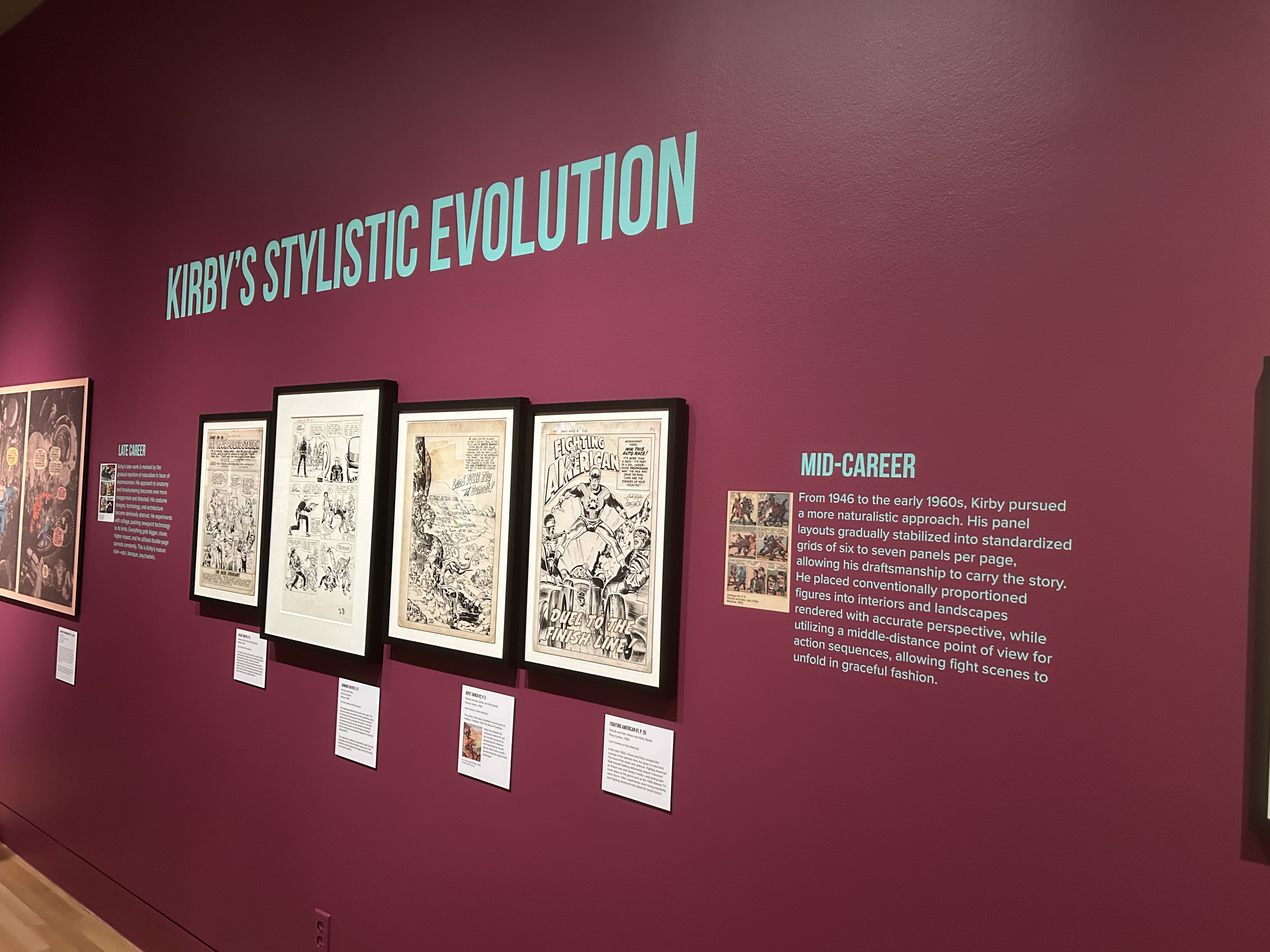
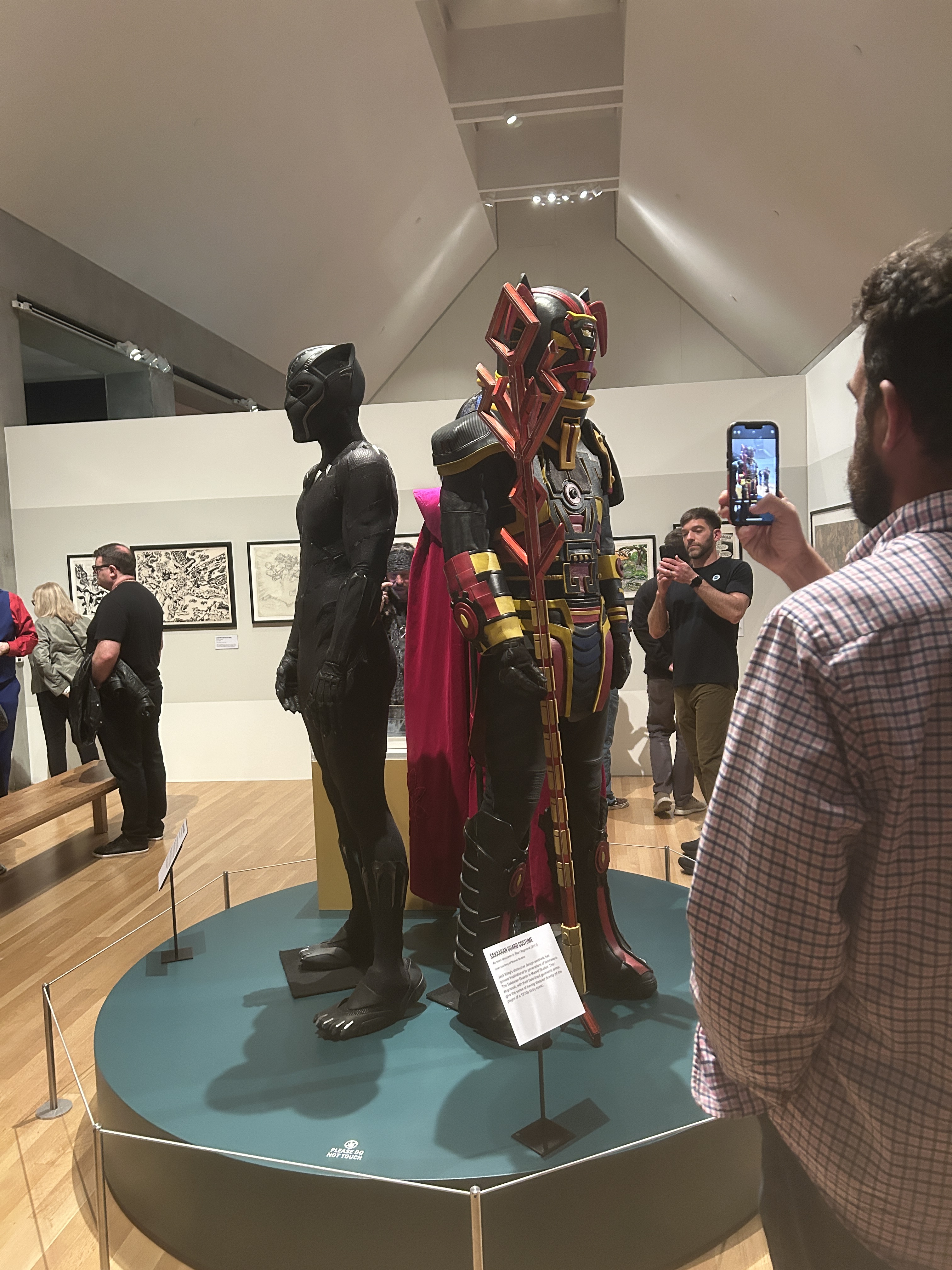
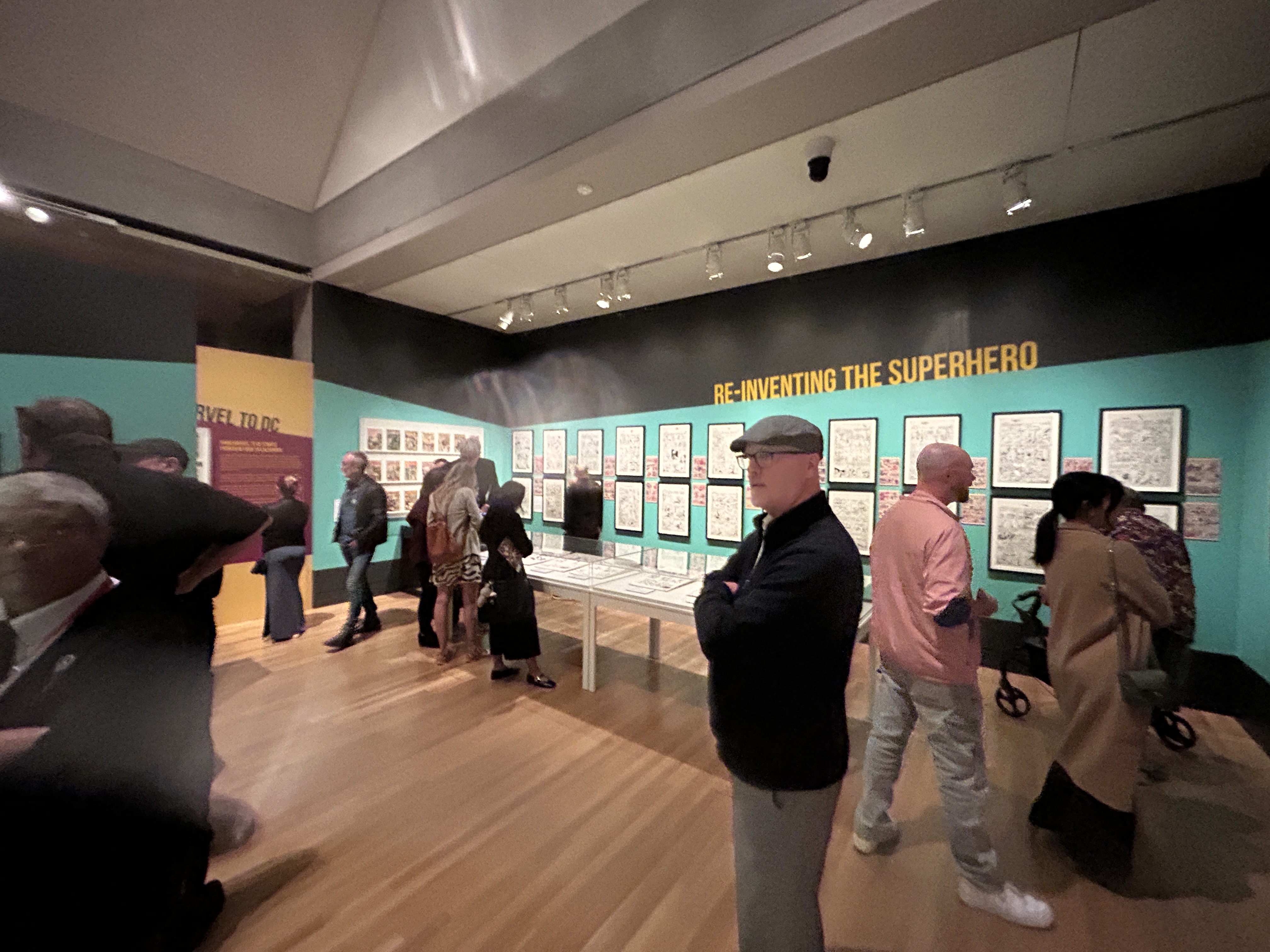
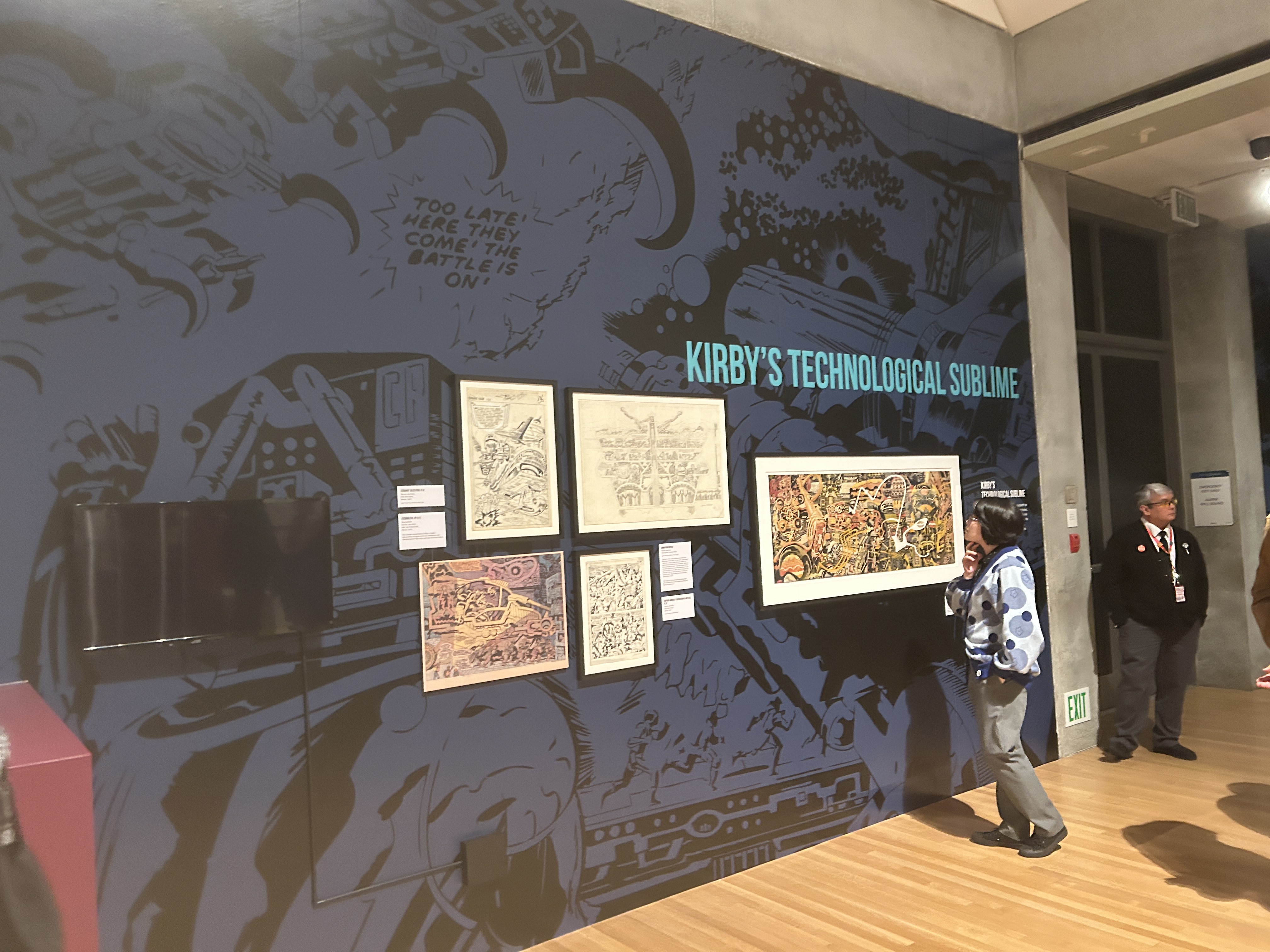
I will have to return to the exhibition to spend more time with favorite elements. Here are a few works that had me goggling or verklempt:


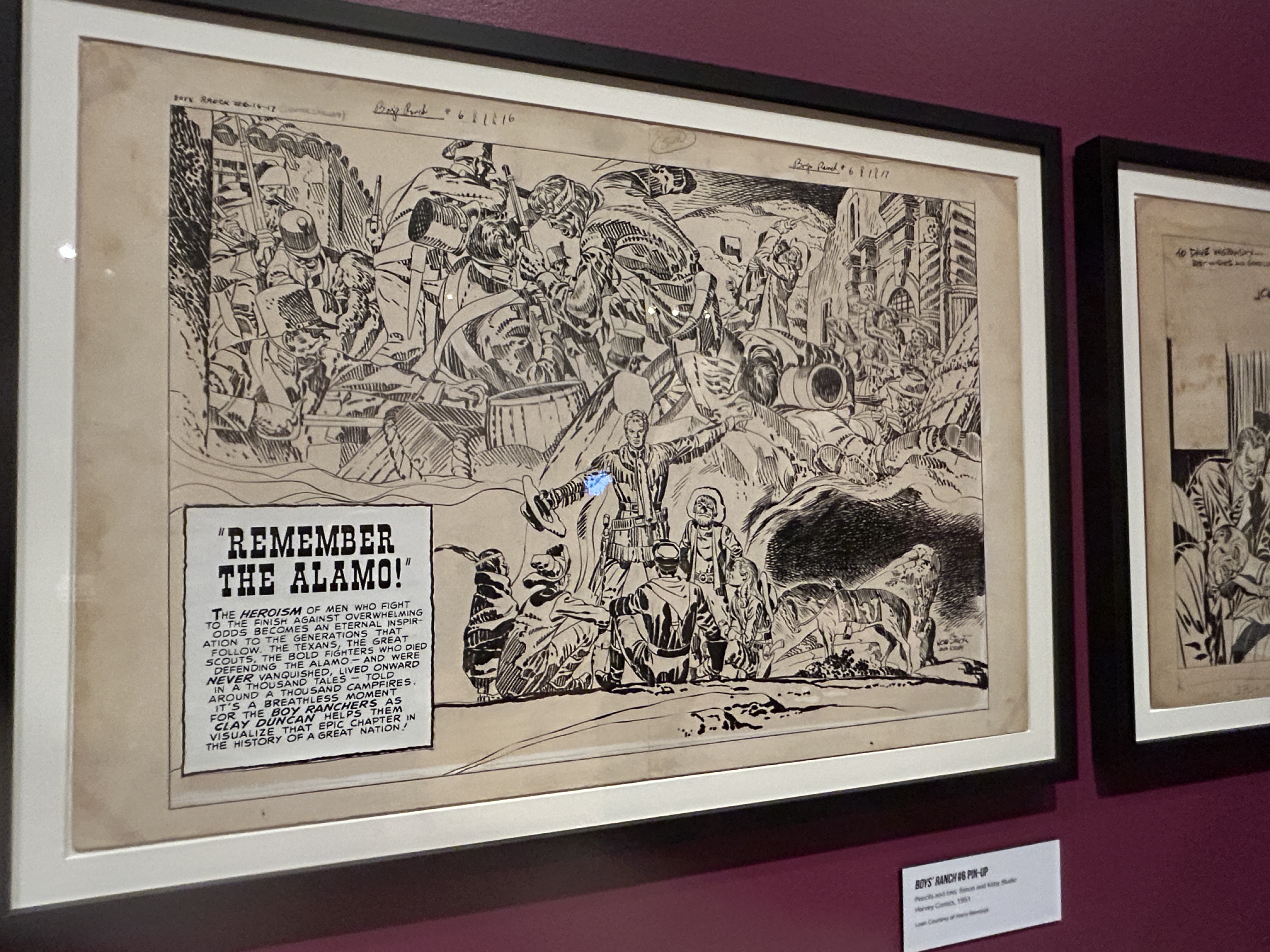
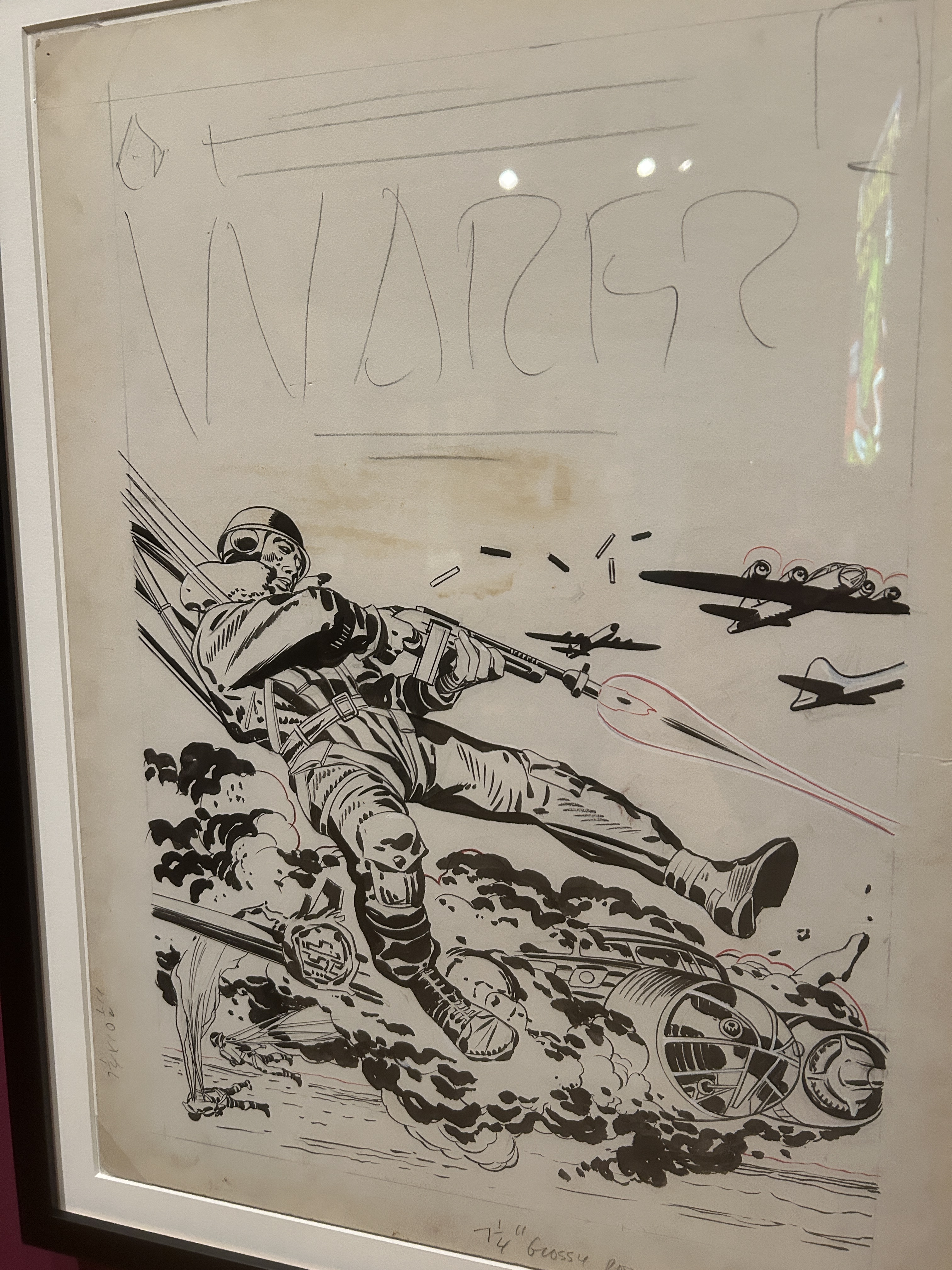


I can’t pretend to be objective about this show, and my memories of last night are a blur; again, I’ll need to return and take it all in again, at my leisure. Writing a full review may be beyond me, as I’m somewhat compromised: co-curators Ben Saunders and Patrick Reed are friends, and I know that this has been a passion project for them just as 2015’s Comic Book Apocalypse was for me. But here are a few impressions:
- This show is properly Kirby-focused, that is, art-focused, not character, property, or brand-focused. There are nods to Kirby’s influence and the spread of his designs beyond his drawing board, and of course the show has a lot to say about Marvel, but it’s Kirby as artist, storyteller, worldbuilder, and visionary that towers over it all.
- The comic art on view unsurprisingly leans toward the latter half of Kirby’s career, given the sheer spectacle of his late work and the greater availability of originals after 1960. However, this is a true career-spanning effort, unlike Comic Book Apocalypse‘s narrower, late Sixties to mid-Seventies take. I loved seeing a fair amount of Simon & Kirby work on the walls.
- That said, I would have liked (I would always like) to see more of Kirby’s kid gang work of the early Forties, including the semi-autobiographical Newsboy Legion and millions-selling Boy Commandos. I think those comics are an underrated, very important part of Kirby’s output, and say a lot about him.
- I would also have liked to see more romance work — the great underserved area in Kirby studies, frankly. This show does acknowledge romance, with multiple examples, but I’d have liked to see more, perhaps a whole installation. I don’t know how much of the peak-period romance art (late Forties to early Fifties) has survived, and I know that most of it lacks the spectacular, wall-sized oomph of late-career Kirby, but man, that part of the story does warrant spotlighting.
- The selection on unpublished, personal work by Kirby knocked me right out. Beautiful, widescreen collages, the stunning drawing of Jacob wrestling the angel (scripture as SF, or vice versa), an explosively colored drawing of warfare: eye-boggling, revelatory work. I got to see a few pieces I’ve never seen before, even in reproduction.
- The exhibition was sharply designed and beautifully mounted, though perhaps too dense for easy absorption. That doesn’t bother me (as I said to my wife Mich, I lose all objectivity when I’m looking at stuff I love — give me excess of it), but wow, were those spaces packed! More for me to enjoy on the return trips, I’m thinking.
In sum: go! If you love or are curious about the history of the American comic book, if you want to know how a once-moribund genre, the superhero, bounced back and became something different, if you are curious about the design roots of the Marvel Cinematic Universe, if you just love narrative drawing, if you want to have the top of your head blown off with sheer visual pleasure (as mine was at about age ten, and has been over and over throughout my life), then GO.
One of my last pix of the night: the leaders of the curatorial team:


 Kirby Studies