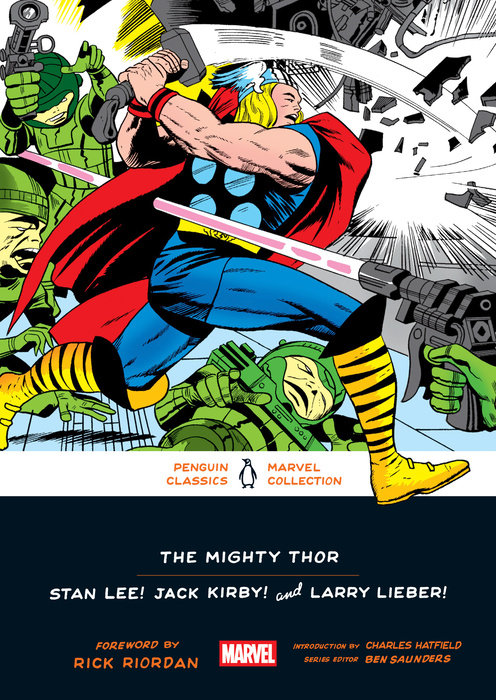
Published today (September 15), here is one of my projects of the last couple of years: The Mighty Thor, an oversized paperback collecting 400-plus pages of 1960s Thor and “Tales of Asgard” comics by Jack Kirby. This is the seventh volume to date in the growing Penguin Classics Marvel Collection. This series is designed for newcomers, especially students, and provides accessible points of entry to the sprawling immensity of Marvel.
I co-curated this volume with series editor Ben Saunders, co-selecting the comics to be included and writing the introduction, interstitial essays, and back matter. It was a pleasure to reread these comics (as well as thousands of pages of comics that didn’t make it into the volume!) and to think and write about them. A most unusual project for me, but I’m pleased that I was able to give a Kirby-centered perspective on this pivotal work.
Deets: The book collects Thor stories from Journey into Mystery #83, 85, and 114-116, and Thor #128-133, 154-157, and 159-161, and five “Tales of Asgard” as well. A heady dose of the Marvel Sixties, and of mythic Kirby! In addition, its bibliography, including suggestions for further reading, provides, I think, a good introduction to Marvel’s Thor in general, from the Sixties to today.
My thanks to Ben Saunders and Penguin Classics for inviting me into this series. I’m glad to be in their company, and that of fellow volume editors Qiana Whitted (who did the Black Panther volume) and Jose Alaniz (who did The Avengers). We’ve worked hard to contextualize these vintage Marvel comics and provide new readers with a welcoming way in. Check out what we’ve done!
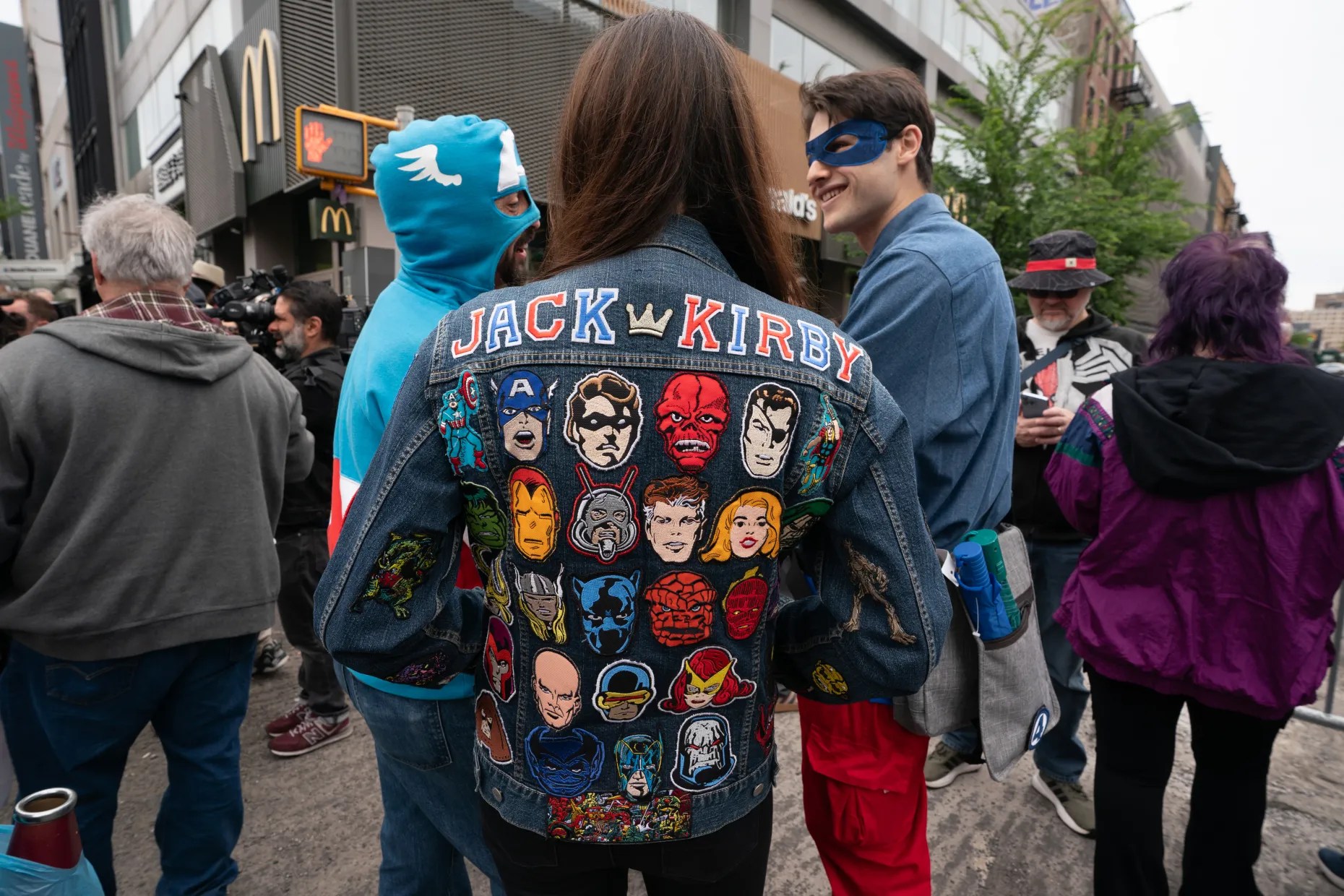
At the Jack Kirby Way naming ceremony, May 11, 2026. Barry Williams / New York Daily News.
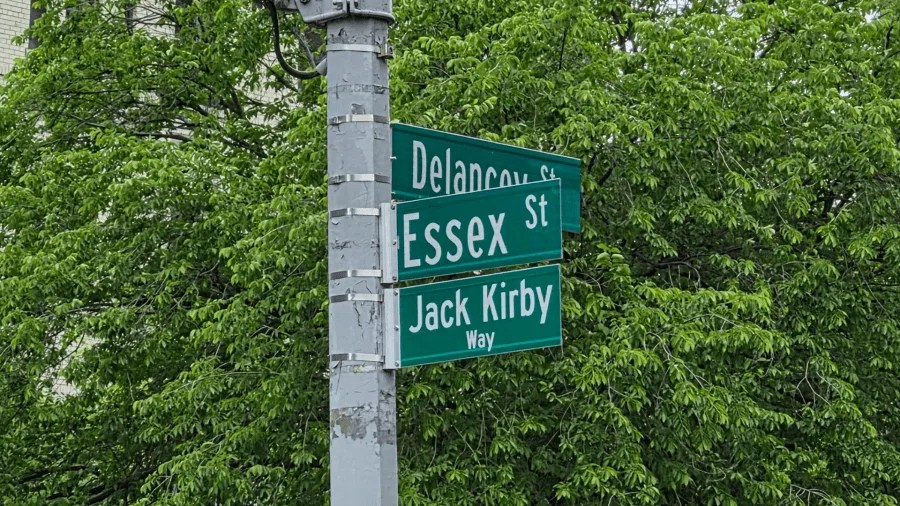
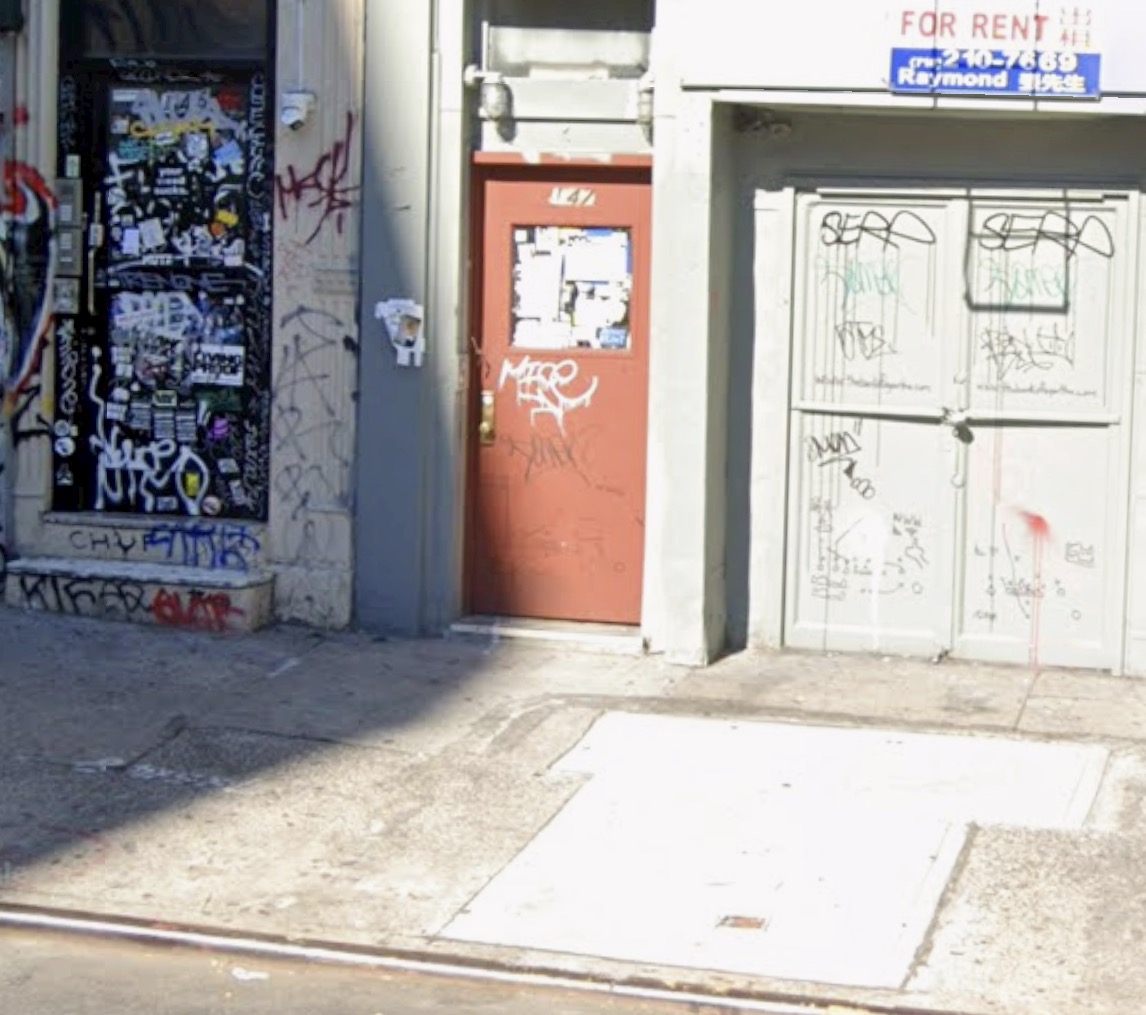
Jack Kirby (b. Jacob Kurtzberg, 1917-1994) would have been 109 years old this very day, August 28. He was born of Galician immigrant parents, Rose and Ben, at 147 Essex Street on New York’s Lower East Side: the first native-born American in his family. A stretch of Essex Street has recently been renamed Jack Kirby Way in his honor. I dearly wish I could have been there this past May 11 for the naming ceremony (it’s just about 2800 miles away, as the crow flies). I celebrate Kirby’s birthday every year, though honestly this feels somewhat selfish, as it was Kirby who gifted so very much to me.
Tomorrow, Saturday, August 29, the Jack Kirby Museum & Research Center hosts its annual walking tour of Kirby’s boyhood environs on the Lower East Side, starting at 11:00 am Eastern (meet at the Jack Kirby Way street sign on the northwest corner of Essex and Delancey).
I am happy to report that The Comics of Jack Kirby, an academic book I am co-editing with Craig Fischer and Susan Kirtley that includes more than a score of contributors, is well underway. (We have submitted a complete MS; watch this space for updates!) As an outgrowth of that project, Susan, Craig, and I, along with our colleague and contributor Anna Peppard, recently presented a panel on Kirby’s character Barda the Comics Studies Society conference in Columbus. That was a blast!
I continue to be delighted by the many affirmations of Kirby’s influence, by the diversity of responses to his work, and by the growing public awareness of this singular artist.
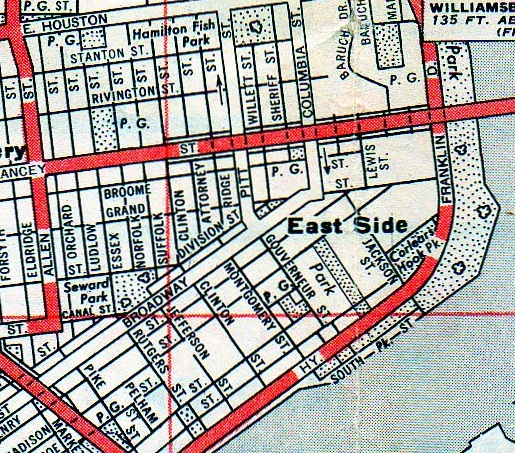
Jack Kirby, a legend now, was born Jacob Kurtzberg on August 28, 1917, at 147 Essex Street on New York’s Lower East Side, in a packed neighborhood that early-20th century writers sometimes called Poverty Hollow: one of the densest, poorest neighborhoods in the US. That Essex Street address is north of Delancey Street, south of Houston, just a couple of hundred yards from the corner of Rivington, and maybe a 15-minute stroll from the East River. Jakie (Kirby) would spend much of his boyhood on Delancey, and, in 1934, join the newly formed NYC branch of the Boys Brother Republic headquartered on East Third Street, about half a mile from his birthplace. The Lower East Side was the crucible of his imagination and his talent, as immortalized in his late-career autobiographical comic “Street Code” (1983). Delancey Street he mythologized as “Yancy Street” in his classic Fantastic Four run, a tribute that continued in the recent film The Fantastic Four: First Steps (dir. Matt Shakman, 2025).
More broadly, Kirby interpreted and sold New York City to millions of readers who, like me, never knew the city when we were growing up. The NYC of Marvel is, at root, a version of Kirby’s New York. It’s about time that NYC acknowledged that debt.
So I’m delighted to report that the New York City Council has chosen to christen a block of Essex Street Jack Kirby Way! The street sign unveiling and dedication happen tomorrow, Monday, May 11, on the northwest corner of Essex and Delancey at 12:00 noon Eastern time. Here’s what the Council had to say last December:
The New York City Council hereby approves the co-naming of Essex Street between Delancey and Rivington Streets Jack Kirby Way, in honor of Jack Kirby, an outstanding New Yorker and a pioneering artist who co-created the Marvel Universe, helped inspire the Pop Art movement, and immortalized the Lower East Side in his work.
Author, producer, and curator Roy Schwartz has been co-leading the street-renaming campaign, and his website has the details. In addition to Schwartz, other speakers at tomorrow’s ceremony will include NYC Council Member Christopher Marte, Marvel editor Nick Lowe, comics scholar and former DC Comics publisher and president Paul Levitz, famed comics artist Jim Steranko, and, from Jack Kirby’s family, Tracy, Jeremy, and Jillian Kirby.
Collaborating with Schwartz on this campaign has been my colleague Karen Green, Curator for Comics and Cartoons at Columbia University, who has been hoping to secure the city’s official acknowledgment of Kirby for a long time. Karen’s work building and promoting the comics collection and archive at Columbia has made her a beloved and uniquely connected figure in the comics field, and it’s great to see that her collaboration with Roy Schwartz has led to this moment. In truth, many, many people, including the leaders of the Jack Kirby Museum and Research Center, had to lean in and lend their energy to make this possible and promote the unveiling.
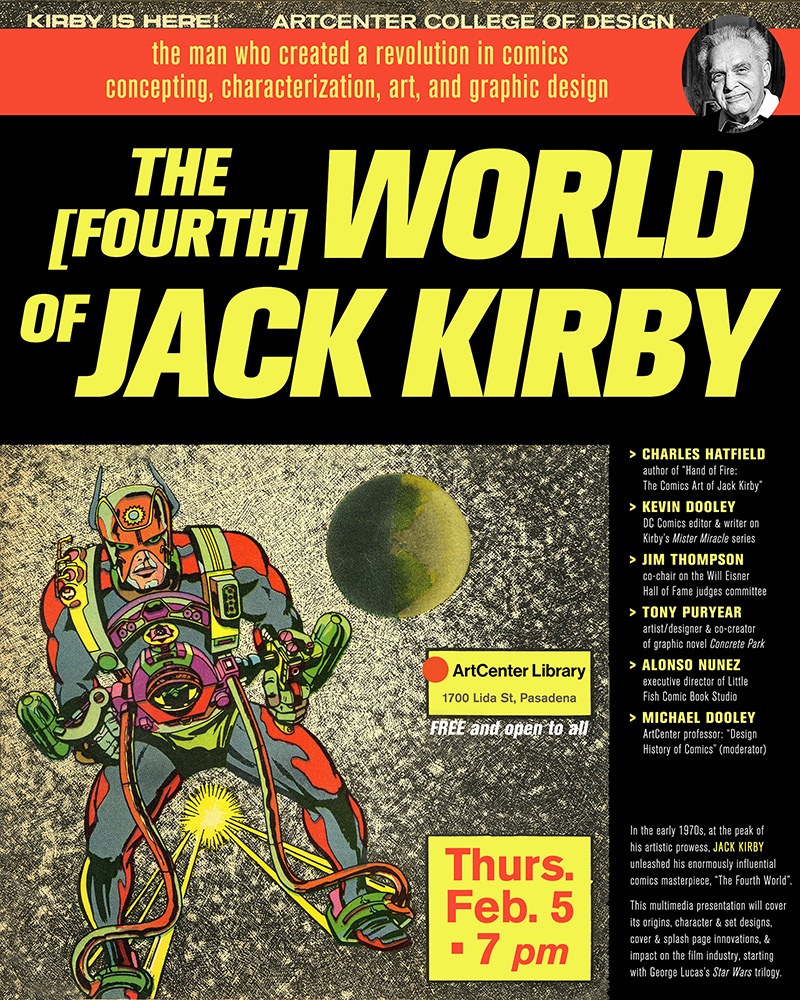
Graphic designer, historian, veteran ArtCenter teacher, and former Eisner Award judge Michael Dooley is moderating and co-organizing the panel. I’ve been a guest of Michael’s at ArtCenter a number of time, usually in his Design History of Comics class, and always I’ve come away with new knowledge and new things to think about. I mean, every time. Michael’s work knocks me out: his many presentations at scholarly and fan events, his contributions to Print magazine, his tireless enthusiasm for documenting comics culture here in southern California. Plus, he is a faithful friend, bon vivant, and troublemaker of the best sort.
Joining us on the panel are:
Kevin Dooley, retired educator and former editor and writer for DC Comics, whom I first met at CSUN years ago. Kevin’s work at DC included editing storied runs of Green Lantern and Aquaman and writing and editing runs of the Mister Miracle series, part of Kirby’s Fourth World. He also edited Fantagraphics’ fondly remembered magazine Amazing Heroes for several years.
Tony Puryear, a Renaissance man if there every was one: artist, writer, comics maker, and more. Tony draws, paints, and designs; he writes for page and screen; he was the first African American screenwriter to script a summer blockbuster (Eraser, 1996). He co-created the comic book series Concrete Park, a polycultural urban dystopia steeped in the influence of Kirby.
Jim Thompson and Alonso Nuñez, both former Eisner judges (like Michael and me) and now co-chairs of the Eisner Hall of Fame judging committee. Jim, who is co-organizing this panel, is a brilliant comics historian and the founder-moderator of the popular and eye-opening Facebook group “A People’s History of Comics.” Alonso is co-founder and executive director of the educational nonprofit Little Fish Comic Studio.
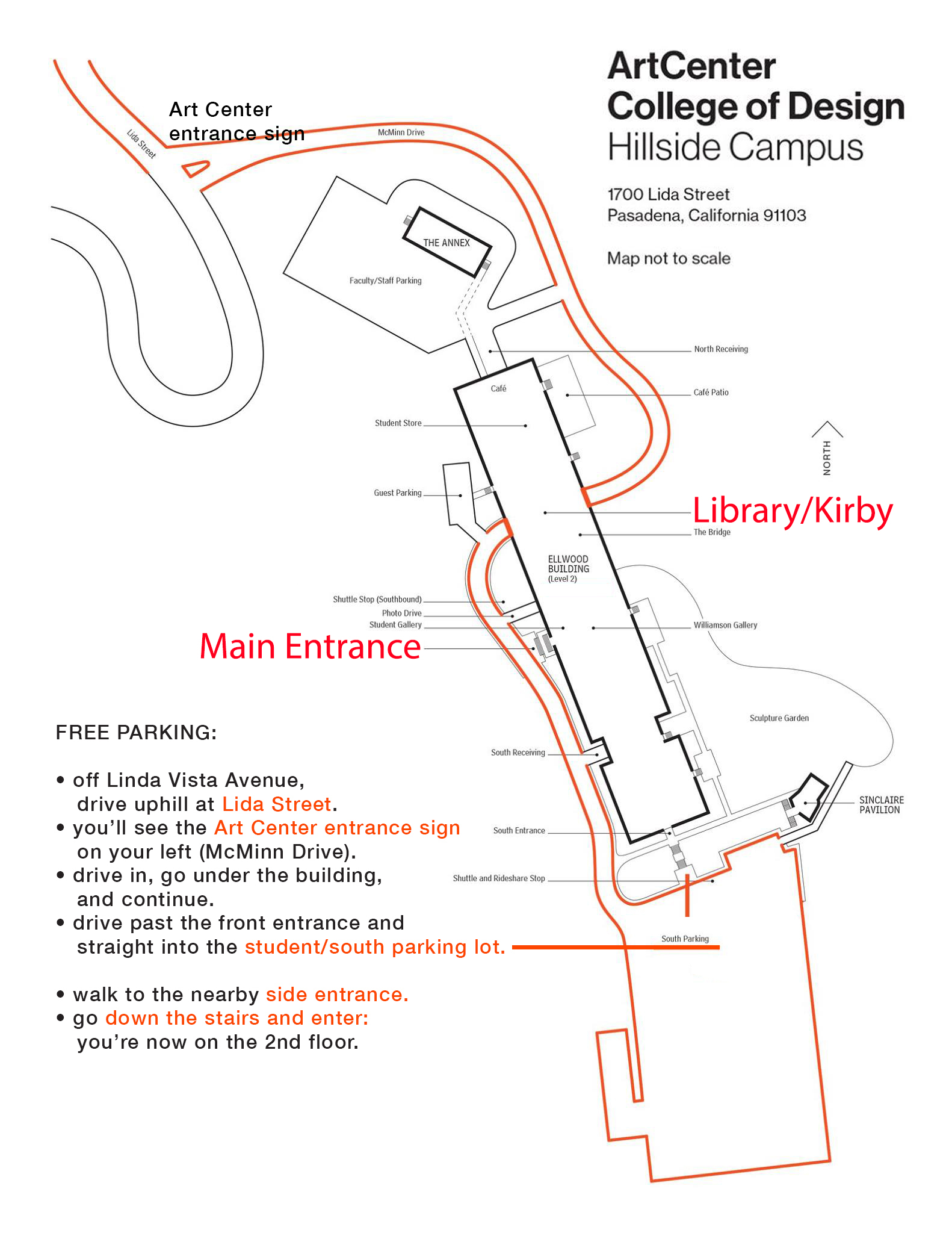
Delighted to be in this good company! This event is free and open to all. Free parking is conveniently available not far from our venue, the ArtCenter Library (venue map below). Many thanks to librarian Mark Parsons for welcoming us!
Jack Kirby (b. Jacob Kurtzberg, 1917-1994) would be 108 years old today.
Born and raised on New York’s Lower East Side, Jacob, or Jakie, or (later) Jack or Kirby, would live through poverty, eke out a living by writing and drawing, lift himself and his family into a precarious middle-class existence, one he always had to fight for, and, over time, reshape US comic books (and pop culture generally) with his profuse, unstinting, freewheeling imagination. Next to my brother Scott, Kirby has probably influenced my reading and writing life, hence my whole outlook, more than any other creator. I’ve had, and I have, other go-to artists and cultural heroes, but Kirby hit me early on, heavily, seriously, knocking me sideways in the best way. I keep trying to write my way to a better understanding of why Kirby, basically, set me afire, but, well, it’s an ongoing effort. Of course.
My introductory comics studies course at CSU Northridge, Comics & Graphic Novels (a bad name, and I’m to blame for it), is focusing on Kirby this semester. That’s a focus my classes haven’t had since 2015. Why again now? Mainly because of the Skirball’s splendid exhibition, Jack Kirby: Heroes and Humanity, which I’ve written about here before and which my students are required to visit. That exhibit, curated by Patrick Reed and Ben Saunders, is open until March 1 next year, and I’m determined to take classes to it. When you’ve got that kind of resource in town, that big and historic a show, not using would be a terrible waste. So, we’re going there, and that means I’ve had to redesign my course yet again! Glad to do it.
For a few years now, I’ve taught Comics & Graphic Novels as a frankly presentist course focusing on currently popular genres in US comics publishing: graphic novels, graphic memoirs, webcomics (increasingly, webtoons), and translated manga, often alongside a token direct-market comic book serial and some minicomix that I loan out. While reading in those genres, we study comics form and also do some experiments in cartooning, culminating in, usually, a final, comics-making creative project. In the past, oh, seven to eight years the number of required books in the course has dropped from a half dozen or more to, sometimes, just three, maybe four. I’ve developed a habit of teaching about key genres in terms of recent examples, while backfilling a bit with lecture to acknowledge certain canonical heavyweights (so, for example, Thi Bui’s The Best We Could Do became a way to talk about Green, Spiegelman, Bechdel, and the autographics tradition). Along the way, lectures about history have actually become fewer, though more targeted.
But now, it’s back to Kirby again, with a vengeance, and therefore back to history. It’s odd but true to say that, despite my love of Kirby, he hasn’t played a very obvious role in my teaching life, maybe because the one class on comics that I get to teach regularly is taxed with covering a lot of things. I mean, I taught an X-Men course this past spring, and of course Kirby figured there, hugely, at the outset, but that wasn’t an auteurist course. And sometimes I teach a whole semester without talking about Kirby much.
The question that the Heroes and Humanity show posed to me was, is, How do I reconcile my usual present-day focus with this grand opportunity to teach Kirby, and through him, comic book history?
So here’s what we’re doing, or what I expect we’ll be doing, over the next roughly fifteen to sixteen weeks:
We started two days ago with some drawing and icebreaking exercises, a few introductory words about that most recalcitrant of subjects, comics (what the hell are they, anyway?), and a very brief intro to Kirby.
Today, Kirby’s birthday, my students will share their homework, that is, their versions of Kirby’s two-page comic, “Hot Box” (Foxhole #2, 1954), which I gave to them sans text and asked them to fill in with their own words. This will lead to some discussion of text anchoring image (in Roland Barthes’ sense) and the multimodal nature of comic art. I also hope we have time to read “Meet Captain America” (Captain America Comics #1, March 1941). Next week we’ll be reading Kirby’s 1968 recreation of Cap’s origin story, “The Hero That Was” (Captain America #109, Dec. 1968). We’ll also be reading Kirby’s beautiful, haunting “Street Code” (created in 1983, published in 1990 in Argosy #2).
Over the next five weeks or so, we’ll read wartime and postwar Simon & Kirby, including some kid gang and romance classics, dive into Tom Scioli’s graphic biography of Kirby, talk about the early history of comic books in general, right up to the 1950s anti-comics eruption and industry implosion, and get ready to absorb the Skirball show.
After we see the show, we’ll get to the Marvel Sixties, covered very selectively over two to three weeks (with, for example, Ben Saunders’ splendid Fantastic Four volume in the Penguin Classics series), and then we’ll spend a couple of weeks talking about the Fourth World, Kirby’s bold 1970s experiment and, from my POV, the peak of his work in serial comic books. Around that time, students will probably be working on their Visual Analyses: side-by-side studies of pages from Kirby comics and other comics of their choosing.
In the back half of the term, in roughly the last six weeks, we’ll read some contemporary artists who take Kirby’s influence in unexpected, independent directions. Only one of our readings will actually be a corporate franchise comic, Ngozi Ukazu’s intriguing take on Kirby’s Barda (DC). Others will include work by Hugo Canuto (Tales of the Orishas), Charles Glaubitz (Starseeds, and more), and Lale Westvind (Grip). I’m determined not to focus on DC and Marvel IP at the expense of other themes. By the end of term, students will be crafting Final Projects: either research projects based on works encountered at the Skirball, or comics projects reflecting on their entire experience in the course.
This is all an experiment, of course: a way of connecting the dots between the comic books of Kirby’s multiple eras and comics of today. I’m excited to see how it plays out!
It’s fitting that Jack Kirby has given me new ways to converse with my students. Happy Birthday and unending thanks to the artist whose influence ushered me into the work I do and who continues to delight, enthrall, confound, and transport.
PS. The Kirby Museum is once again hosting a walking tour of Kirby’s Lower East Side, this very day. This is a great way to think about the roots of Kirby, and where so much of our comics iconography and pop culture have come from. Check it out: 6:30 pm Eastern on the SE corner of Essex and Delancey, and then ending up at the original location of the Boys Brotherhood Republic, 90 East 3rd St. Would that I could be there in person. ❤